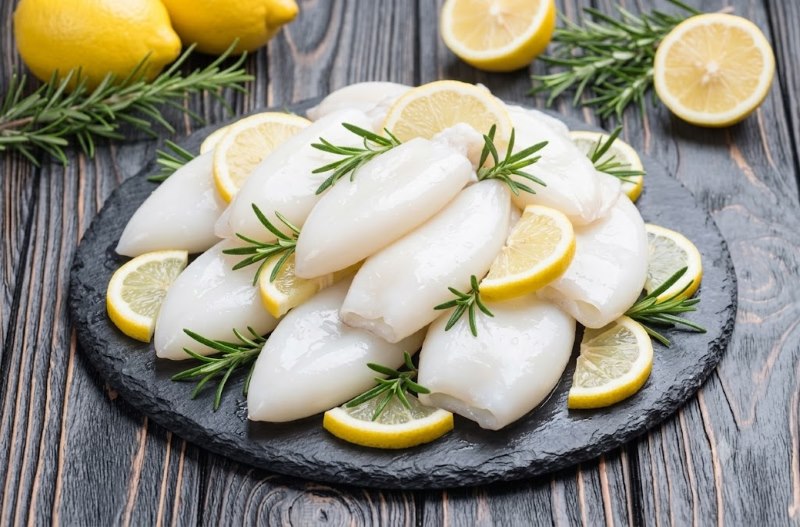
Vietnam Squid & Octopus Exports 2026: Buyer's Guide
Vietnam Squid & Octopus Exports in 2026: A Sourcing Guide for Importers
Key takeaways
- Vietnam's squid and octopus exports reached US$524 million in the first 8 months of 2026, up 14.4% year on year — one of the fastest-recovering categories in Vietnamese seafood.
- Asia is the demand engine. South Korea is the single largest market (over a third of the total), followed by Japan, with China and ASEAN rising fast.
- Squid is outpacing octopus, growing roughly 30% versus 16% early in the year as consumer demand rebounds.
- Sourcing success now hinges on traceability, certification, and a single accountable supplier — the same factors that keep shipments moving through tightening import controls.
Vietnam has become one of the world's most reliable sources of wild-caught cephalopods, and 2026 has been a standout year. For importers and distributors deciding where to place squid and octopus orders, this guide covers the market data, the buying markets driving demand, the product formats you'll encounter, and what separates a dependable supplier from a risky one.
Vietnam squid and octopus exports at a glance (2026 data)
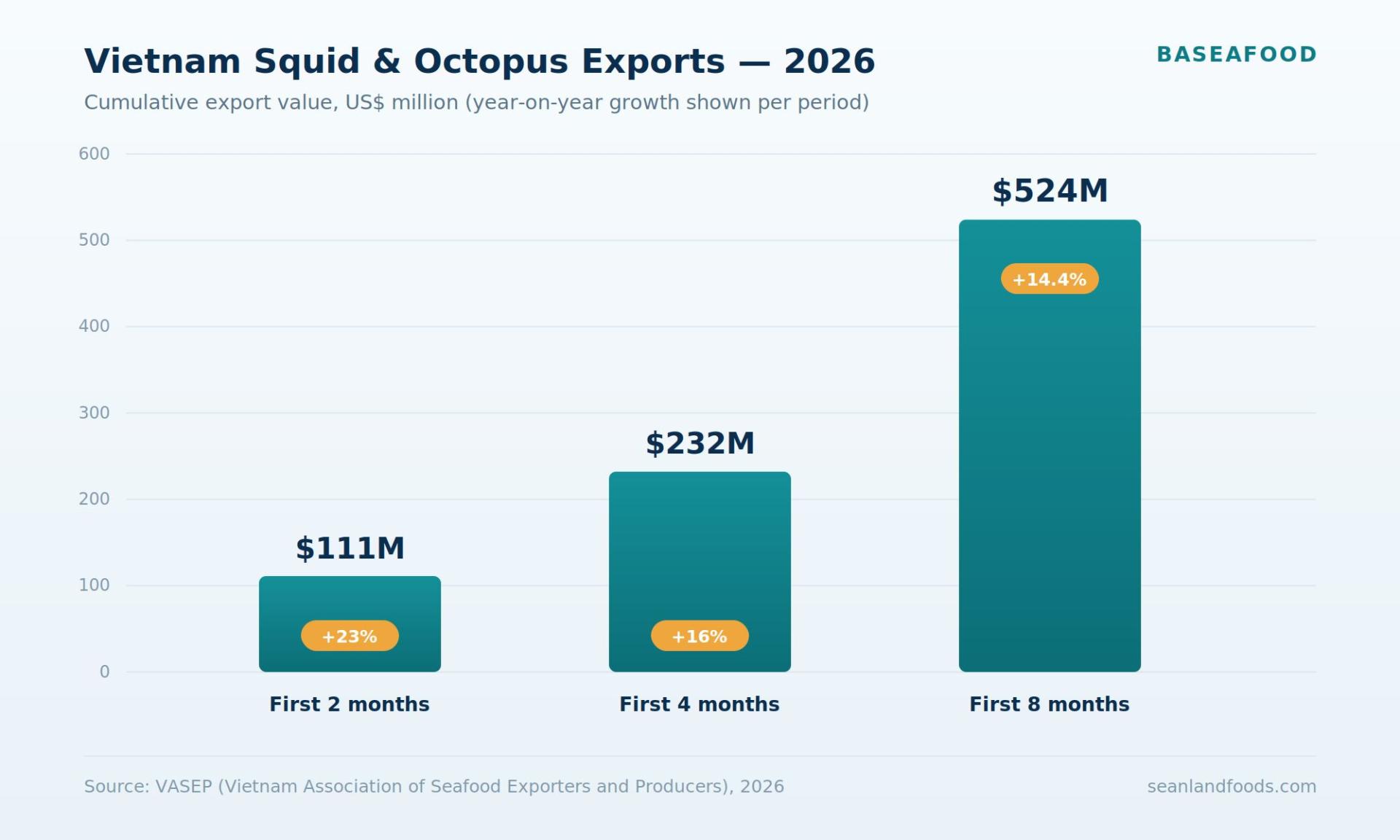
Vietnam's squid and octopus trade rebounded strongly through 2026, with double-digit growth sustained across the year. The table below summarises the trajectory reported by the Vietnam Association of Seafood Exporters and Producers (VASEP).
| Period (2026) | Squid & octopus exports | Year-on-year change |
|---|---|---|
| First 2 months | ~US$111 million | +23% |
| First 4 months | ~US$232 million | +16% |
| First 8 months | ~US$524 million | +14.4% |
| August (month) | ~US$75 million | +5.7% |
For context, Vietnam's total seafood exports reached roughly US$8 billion in the first 8 months of 2026 (up 11.8%), with the industry targeting more than US$12 billion for the full year. Squid and octopus have grown faster than the seafood average — a signal of genuine demand recovery rather than a one-off spike.
VASEP — Vietnam squid and octopus export statistics]
Why global demand for Vietnamese squid and octopus is rising
Asia is the growth engine
Asian buyers account for the bulk of Vietnam's cephalopod exports, and their return to the market has powered 2026's growth.
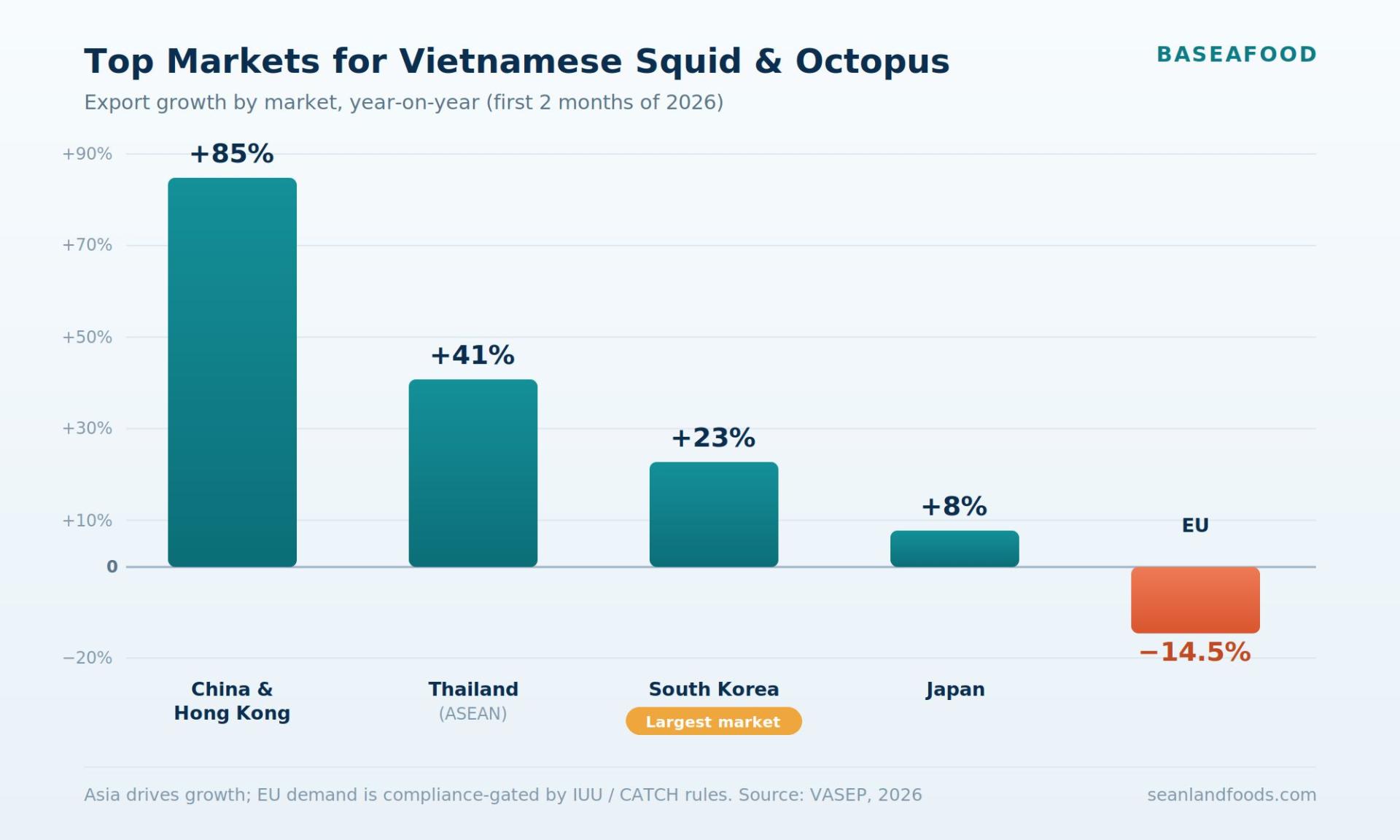
- South Korea is the largest destination, taking over a third of Vietnam's squid and octopus exports — making it both the biggest opportunity and the biggest concentration risk for the category.
- Japan is the second-largest market, growing steadily on demand for cleaned squid and boiled octopus for retail and foodservice.
- China & Hong Kong surged early in 2026 (up more than 85% in the opening months) and are now the top overall seafood destination for Vietnam.
- ASEAN markets such as Thailand grew sharply (Thailand up more than 41% early in the year), diversifying the buyer base.
The EU: high value, but compliance-gated
European demand for cephalopods is high-value, but access is now tightly controlled. EU squid and octopus imports from Vietnam softened early in 2026 (down around 14.5%), largely reflecting stricter traceability enforcement rather than weak appetite. Since January 2026, every wild-caught consignment must clear the EU's mandatory digital catch-documentation system — a requirement that rewards suppliers with airtight paperwork and penalises those without it.
If the EU is a target market for your business, understanding the documentation is non-negotiable. See our detailed guide: “EU CATCH & IUU documentation for squid and octopus importers”
Diversification into new markets
With Korea alone taking more than a third of exports, Vietnamese processors and their buyers are actively diversifying. Emerging destinations flagged for cephalopods include Brazil, wider South America, and South Asia — a trend worth watching for importers who want first-mover pricing in less saturated markets.
Squid vs octopus: what's driving the product mix
The two headline products are recovering at different speeds.
- Squid led the rebound, with exports above US$64 million in the first two months of 2026 and growth close to 30% — the faster-moving of the two.
- Octopus grew more modestly, above US$47 million in the same period, up around 16%.
This gap matters for buyers: squid demand is recovering quickly, so securing reliable squid supply and pricing early in a cycle is more competitive. Octopus offers steadier, high-margin opportunities, particularly in Japan, Korea, and Mediterranean-style EU markets.
Product formats importers should know
Squid and octopus are traded in a wide range of cuts and preparations, each suited to a different buyer and price point. Matching the right format to your market before you request a quote saves time and cost.
| Product | Common formats | Typical use |
|---|---|---|
| Squid (Loligo & others) | Whole Round, Whole Cleaned, Tube, Ring, Tentacle/Head, Dried | Retail packs, foodservice, calamari rings, further processing |
| Octopus | Whole cleaned (standard & baby), cuts, boiled tips, Iwadako-style pieces | Sushi/sashimi, ready-to-eat, grilled and braised dishes |
| Cuttlefish | Whole cleaned, fillet, slices | Retail and foodservice, value-added |
A supplier that processes the full range under one roof lets you consolidate orders across formats with a single, traceable source. Explore our product guides: “squid and octopus format guides for importers”
What to look for when sourcing squid and octopus from Vietnam
Choosing a Vietnamese cephalopod supplier comes down to five practical checks:
- Certifications. Look for internationally recognised food-safety and social-audit standards — HACCP, BRC, IFS, ISO 22000, SMETA, HALAL, and FDA registration cover most global markets.
- Traceability and documentation. The supplier must be able to produce complete catch and processing documentation for every lot. This is what keeps consignments moving through EU and other controlled markets.
- Single-source capability. A processor handling the full product range end-to-end reduces the number of intermediaries — and the number of points where paperwork or quality can slip.
- Capacity and consistency. Confirm the supplier can meet your volume year-round, not just in peak season.
- Sample documentation upfront. A capable exporter will show you the exact certificate and spec formats before you commit to a container.
Where Baseafood fits
Baseafood is a Vietnamese seafood exporter based in Bà Rịa–Vũng Tàu, processing squid, octopus, cuttlefish, frozen fish, dried seafood, and surimi. Our facilities are certified to HACCP, BRC, IFS, ISO 22000, SMETA, HALAL, and FDA standards, and we produce the full range of cephalopod formats under a single, traceable source — with complete catch documentation issued for every lot.
“Request a quote and product specifications”
Risks and headwinds in 2026 (and how to manage them)
Growth is real, but so are the risks. Smart buyers plan around them.
- IUU rules and EU traceability. Vietnam remains under the EU's IUU "yellow card," and the EU's digital catch-documentation system is now mandatory. Manage this by sourcing only from suppliers with complete, verifiable paperwork — “see our EU documentation guide”.
- Market concentration. With Korea taking over a third of exports, any shift in Korean import policy or demand ripples through the whole category. Diversify your own sourcing and destination mix.
- Raw-material and logistics costs. Fuel prices and geopolitical tension have raised shipping and harvesting costs, which can affect availability and lead times. Prioritise suppliers with stable raw-material access.
- Tariffs and trade shifts. Trade-policy moves in major markets are redirecting global seafood flows in 2026. For how this affects sourcing decisions.
Outlook for the rest of 2026
The near-term outlook is positive. Seasonal festival demand and inventory restocking in key Asian markets are expected to keep volumes high into year-end, keeping Vietnam's overall seafood target of US$12 billion within reach. For squid and octopus specifically, continued strength in Korea and ASEAN — plus a gradual EU recovery for well-documented suppliers — points to another year of double-digit growth.
For importers, the message is clear: demand is there, but the winners will be the buyers who lock in certified, traceable supply early.
FAQ
How much squid and octopus does Vietnam export?
In the first 8 months of 2026, Vietnam exported about US$524 million of squid and octopus, up 14.4% year on year. The category has grown faster than Vietnam's overall seafood exports, which reached roughly US$8 billion over the same period.
What is the biggest market for Vietnamese squid and octopus?
South Korea is the largest market, taking over a third of Vietnam's squid and octopus exports, followed by Japan. China, Hong Kong, and ASEAN markets have grown rapidly in 2026.
Is squid or octopus growing faster?
Squid recovered faster in early 2026, growing close to 30%, while octopus grew around 16%. Both categories are in double-digit growth, but squid demand rebounded more quickly.
What squid and octopus formats can I import from Vietnam?
Squid is available as Whole Round, Whole Cleaned, Tube, Ring, Tentacle/Head, and Dried. Octopus comes as whole cleaned (standard and baby), cuts, boiled tips, and Iwadako-style pieces. Cuttlefish is available whole cleaned, as fillet, or sliced.
What certifications should a Vietnamese seafood supplier have?
For global market access, look for HACCP, BRC, IFS, ISO 22000, SMETA, HALAL, and FDA registration. These cover food safety, quality, social-audit, and market-specific requirements — and signal that the supplier operates the traceability systems that import controls now demand.
Can I import Vietnamese squid and octopus into the EU?
Yes, but every wild-caught consignment needs complete catch documentation submitted through the EU's mandatory CATCH system. Sourcing from a certified supplier that issues full documentation is the key to smooth EU customs clearance.
Conclusion
Vietnam's squid and octopus exports are on a strong 2026 trajectory, led by Asian demand and a fast-recovering squid segment. For importers, the opportunity is real — and the deciding factor is supplier quality: certification, traceability, and complete documentation for every lot.
Baseafood supplies the full range of squid, octopus, and cuttlefish from Bà Rịa–Vũng Tàu, backed by HACCP, BRC, IFS, ISO 22000, SMETA, HALAL, and FDA certification. Contact us for a quote and product specifications.

