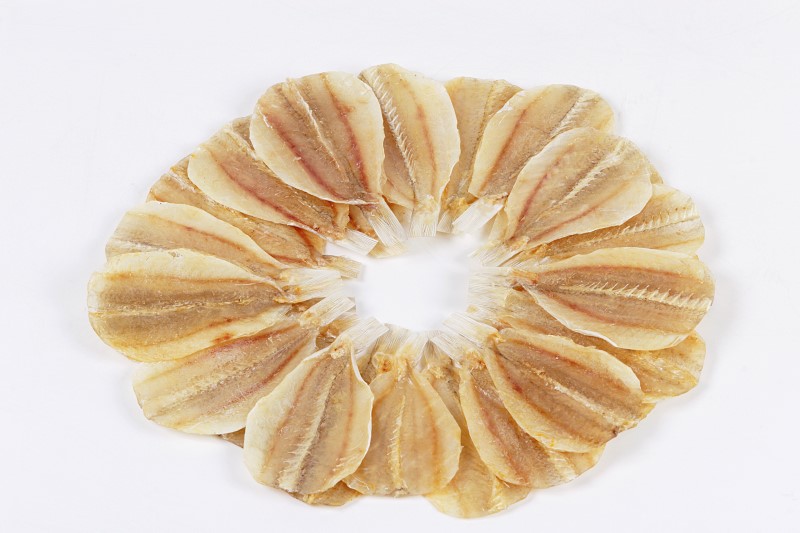
Vietnam top export dried seafood
Vietnam Top Export Dried Seafood
Beyond fish, Vietnam's coastal drying and salting traditions extend across nearly every category of seafood — squid, cuttlefish, octopus, shrimp, crab, and even specialty items like dried stingray fin. For importers and distributors building a dried seafood portfolio, understanding what's available — and under which name — is the first step before requesting samples or a quote.
This guide covers 10 of the most commonly exported dried seafood products from Vietnam, organized by category, with certification standards and buyer guidance for each.
Key Takeaways
- Vietnam's dried seafood exports span five categories: dried fish, dried cephalopods (squid, cuttlefish, octopus), dried shrimp, dried snack-format specialty items (filefish jerky, stingray fin), and dried crab.
- Buyer personas differ significantly by product: ethnic grocery distributors (fish, shrimp), bar/snack retail channels (filefish jerky, stingray fin — popular anju/otsumami pairings with beer and soju), and foodservice/food manufacturing (squid, cuttlefish, octopus as cooking ingredients).
- Always confirm skin-on vs skinless, seasoned vs unseasoned, and moisture/salt content specifications — these vary significantly by product and affect both shelf life and end use.
- Standard certifications across Vietnamese dried seafood exporters, including Baseafood: HACCP, BRC, FDA, HALAL, SMETA, ISO, IFS.
1. Dried Fish
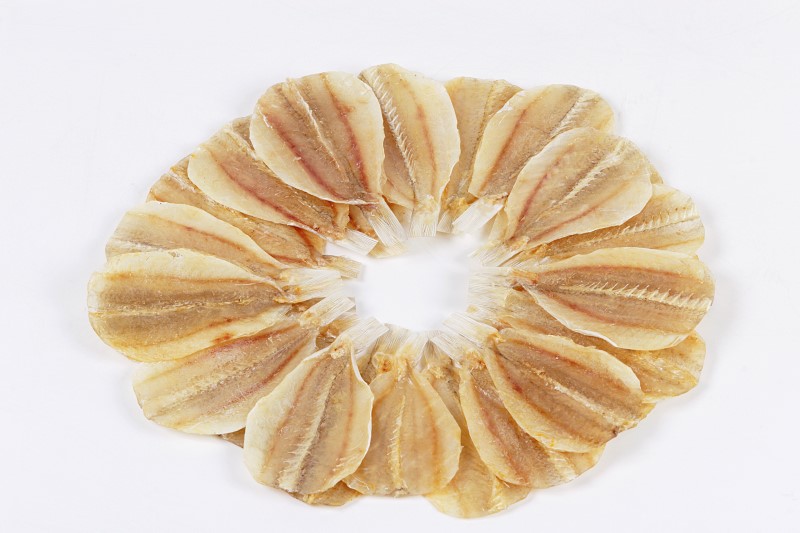
Dried fish is the largest category of Vietnam's dried seafood exports by volume, spanning anchovy, round scad, yellowstripe trevally, rabbitfish, and many other species sold whole, filleted, or butterflied. Each species serves different markets — from Filipino grocery staples to Vietnamese home cooking ingredients.
→ For a full breakdown of individual dried fish products, see our companion guide: Vietnam's Top Export Dried Fish
2. Dried Squid, Skin-On (Mực Khô Còn Da)
Dried squid is one of Asia's most recognizable snack foods — chewy, savory, and traditionally sun-dried without seasoning to preserve its natural umami flavor. The skin-on version retains the squid's natural skin for a more traditional appearance and texture, popular in Vietnam, Korea, China, and Japan as a beer/soju snack or grilled appetizer.
Best for: Asian snack retail distributors, bar/anju channels, buyers wanting a traditional, unseasoned dried squid presentation.
→ See our full product page: Dried Loligo Squid, Skin-On
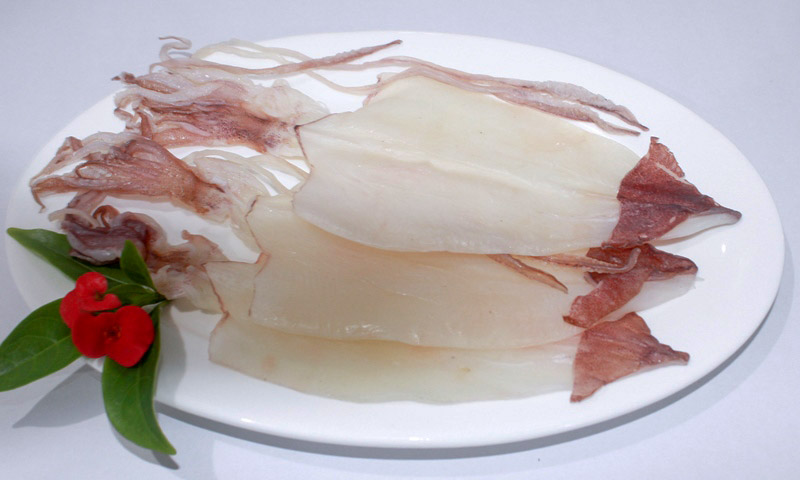
3. Dried Squid, Skinless (Mực Khô Lột Da)
The skinless version of dried squid offers a cleaner, more uniform appearance — in Korea, this style overlaps with "Hanchi," a term specifically associated with tender, thin-bodied squid species, sometimes used in premium raw preparations. Skinless squid suits buyers who prioritize presentation consistency for retail packaging.
Best for: premium retail packaging, Korean market buyers familiar with the Hanchi designation, distributors wanting a cleaner visual product.
→ See our full product page: Dried Loligo Squid, Skinless
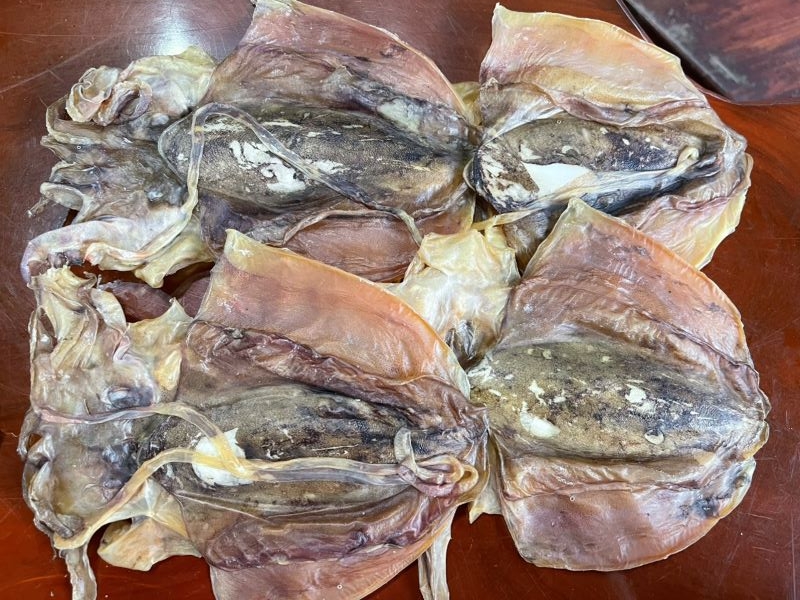
4. Dried Cuttlefish, Whole Round (Mực Nang Khô)
Dried whole cuttlefish is valued for its firmer bite and richer flavor compared to squid, commonly grilled or toasted before eating, and torn into strips for dipping in mayonnaise-chili or soy-vinegar sauces. It holds a similar cultural role to dried squid across Vietnam, Korea, China, and Japan, but is often positioned as a slightly more premium product.
Best for: snack retail distributors, buyers seeking a differentiated SKU alongside standard dried squid offerings.
→ See our full product page: Dried Cuttlefish, Whole Round
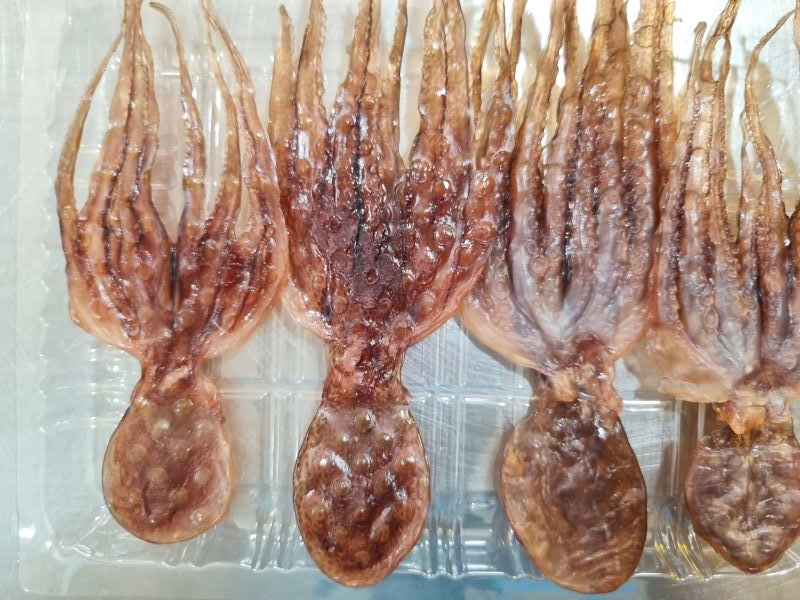
5. Dried Octopus, Seasoned (Bạch Tuộc Khô Tẩm Gia Vị)
Seasoned dried octopus is a ready-to-eat snack — typically sweetened and salted for a balanced flavor profile — distinct from dried squid and cuttlefish in both texture (chewier) and visual presentation (often shown with tentacles intact). It appeals to buyers looking to diversify a dried cephalopod snack lineup beyond squid.
Best for: snack retail distributors, buyers building a varied dried seafood snack range for convenience stores and Asian grocery chains.
→ See our full product page: Dried Octopus, Seasoned
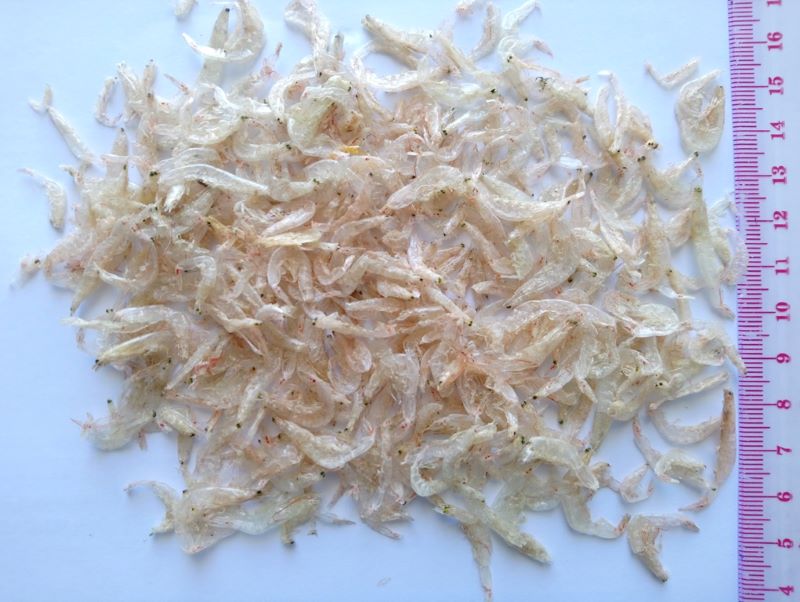
6. Dried Baby Shrimp / Akiami Paste Shrimp (Ruốc Khô)
Made from tiny Acetes shrimp, dried baby shrimp is a foundational cooking ingredient across Vietnamese, Chinese, Filipino, and Malaysian cuisines — used in pancakes, salads, congee, and condiments rather than eaten as a standalone snack. Naturally dried without seasoning, it preserves a pure, versatile flavor suited to a wide range of recipes.
Best for: food manufacturers, ethnic grocery distributors serving multiple Southeast and East Asian communities simultaneously.
→ See our full product page: Dried Baby Shrimp / Akiami Paste Shrimp
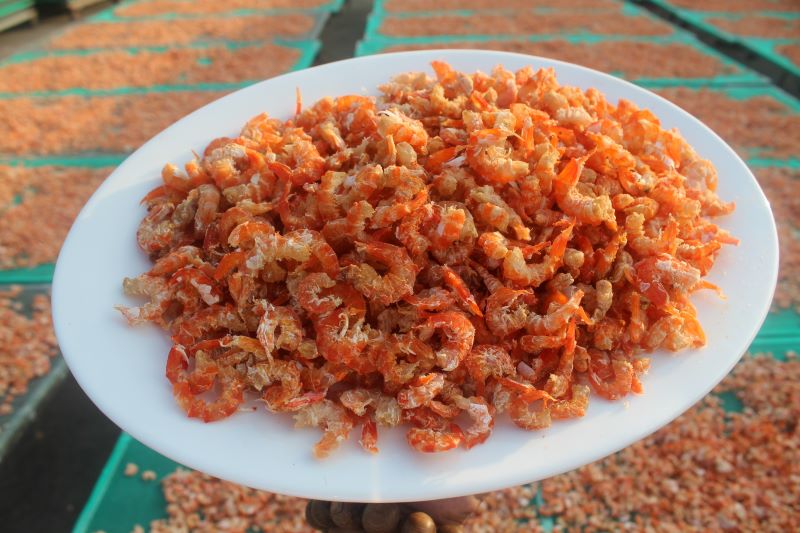
7. Dried Shrimp, No Color Additives (Tôm Khô Không Phẩm Màu)
Larger-format dried shrimp, processed without artificial coloring, appeals to buyers and retail segments specifically seeking "clean label" ingredients — a growing priority for health-conscious consumers and manufacturers facing stricter food additive labeling requirements in export markets.
Best for: retail brands emphasizing natural/clean-label positioning, buyers in markets with strict food coloring regulations.
→ See our full product page: Dried Shrimp, No Color Additives
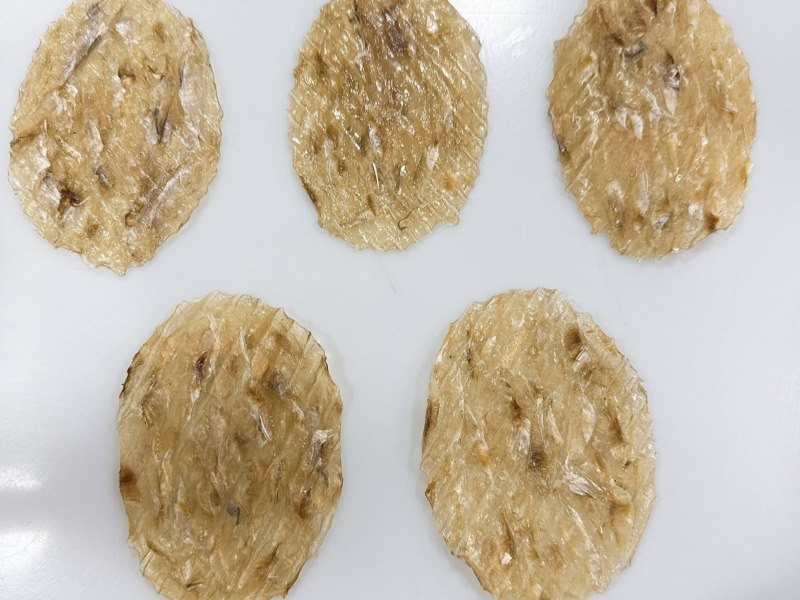
8. Dried Filefish (Jwipo) (Cá Bò Khô)
Jwipo is a classic Korean dried fish jerky made from seasoned, pressed, and dried filefish — sweet, savory, and chewy, traditionally paired with beer or soju as anju (drinking snack). It's one of the most recognized dried seafood snacks in the Korean market specifically, distinct from the general Southeast Asian dried fish category.
Best for: Korean grocery and bar/anju snack distributors, buyers targeting the Korean or Korean-diaspora snack market specifically.
→ See our full product page: Dried Filefish (Jwipo)
9. Dried Stingray Fin, Seasoned (Eihire) (Vây Cá Đuối Khô)
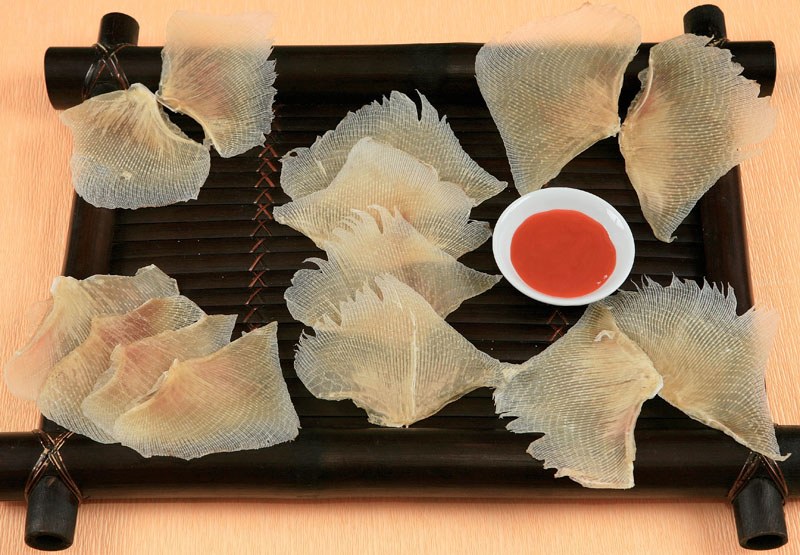
Known in Japan as eihire, dried and seasoned stingray fin is a well-established izakaya bar snack, typically lightly grilled before serving to bring out a smoky, chewy texture with a subtly sweet-savory seasoning. It occupies a specialty niche distinct from mainstream dried fish or squid snacks, appealing specifically to Japanese bar and retail channels.
Best for: Japanese izakaya-style bar snack distributors, specialty Asian snack importers.
→ See our full product page: Dried Stingray Fin, Seasoned (Eihire)
10. Dried Baby Crab, Three-Spot Swimming Crab (Ghẹ Sữa Say)
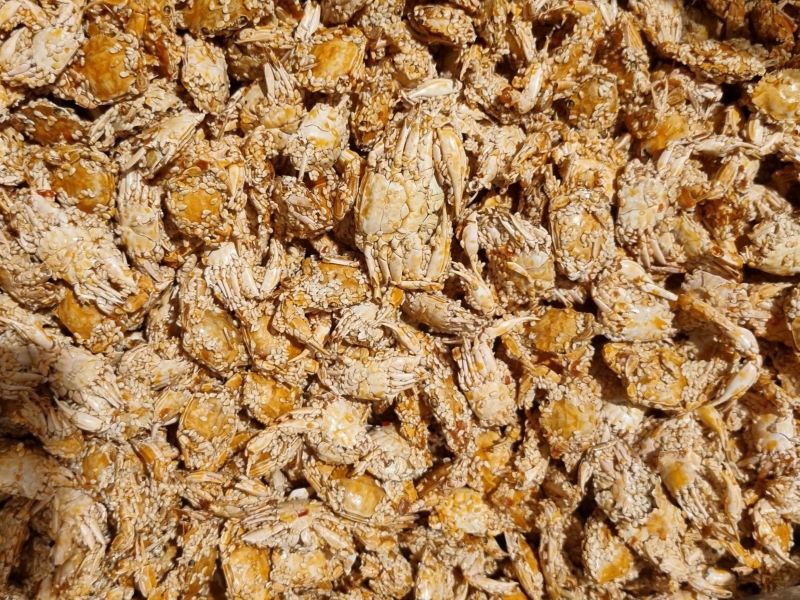
Whole dried baby crab — made from young three-spot swimming crab — is typically deep-fried whole and eaten shell-and-all, prized for its crunchy texture and concentrated savory-briny flavor. It's a distinctive, premium-positioned dried seafood snack less commonly found outside specialty Asian markets.
Best for: premium snack retail, specialty Asian food importers looking for a differentiated, higher-value SKU.
→ See our full product page: Dried Baby Crab, Three-Spot Swimming Crab
How to Choose the Right Dried Seafood for Your Market
| If you're sourcing for... | Consider these products |
|---|---|
| General Asian grocery / cooking ingredients | Dried fish, dried baby shrimp, dried shrimp |
| Bar / anju / izakaya snack channels | Dried squid, dried cuttlefish, dried filefish (Jwipo), dried stingray fin |
| Korean market specifically | Dried filefish (Jwipo), dried squid (Hanchi-style skinless) |
| Japanese market specifically | Dried stingray fin (Eihire) |
| Premium / differentiated snack retail | Dried octopus, dried baby crab |
| Clean-label / health-conscious retail | Dried shrimp (no color additives) |
Why Source Dried Seafood from Vietnam
Vietnam's long coastline and established seafood processing infrastructure make it a leading origin for dried seafood exports across nearly every category — fish, cephalopods, crustaceans, and specialty snack items alike. Buyers benefit from: (1) diverse raw material access spanning both marine and estuarine species; (2) decades of traditional drying, salting, and seasoning expertise; and (3) modern, certified export facilities — HACCP, BRC, FDA, HALAL, SMETA, ISO, and IFS — capable of serving buyers across Asia, the Middle East, Africa, Europe, and North America with full traceability documentation.
Baseafood processes and exports all 10 product categories covered in this guide. Explore the full Dried Seafood range or our companion guide to Vietnam's Most Popular Dried Fish for more detail on individual fish species.
Frequently Asked Questions
What is the difference between dried squid, dried cuttlefish, and dried octopus? All three are dried cephalopod snacks, but differ in texture and presentation. Squid is generally the mildest and most widely available; cuttlefish is firmer and slightly richer in flavor; octopus (especially seasoned versions) tends to be chewier, often sold with tentacles visible for a distinctive presentation.
Why do bar/anju snacks like Jwipo and Eihire target specific single countries rather than being sold generally? These products are tied to specific national drinking-snack cultures — Jwipo to Korean anju traditions, Eihire to Japanese izakaya culture — so demand and brand recognition is concentrated in those markets, even though the products are manufactured in Vietnam for export.
What does "no color additives" mean for dried shrimp, and why does it matter? It means the shrimp's natural color is preserved through processing without added artificial coloring agents. This matters for buyers in markets with strict food labeling laws, or for retail brands positioning their products as "clean label" or natural.
Can I request mixed-category containers (e.g., dried fish and dried squid together)? Most Vietnamese exporters, including Baseafood, can consolidate multiple product categories into a single container (LCL) or arrange full container loads (FCL) per SKU — confirm minimum order quantities directly with the supplier.
How can I request samples or a wholesale quote for any of these products? Contact Baseafood with your target market, product selection, and estimated volume to receive pricing, samples, and export documentation.
Contact Baseafood — Vietnam Dried Seafood Supplier & Exporter
For quotations, samples, or export documentation for any of the dried seafood products in this guide, contact:
Ms. Nguyen Email: nguyen.thao@baseafood.net WhatsApp: +84 702 520 288

